The AI-Led Outbound Framework: Atishay Jain's Approach to Cold Email
How Atishay Jain combines artificial intelligence with human expertise to create cold emails that don't feel cold, and generate 3x better response rates.
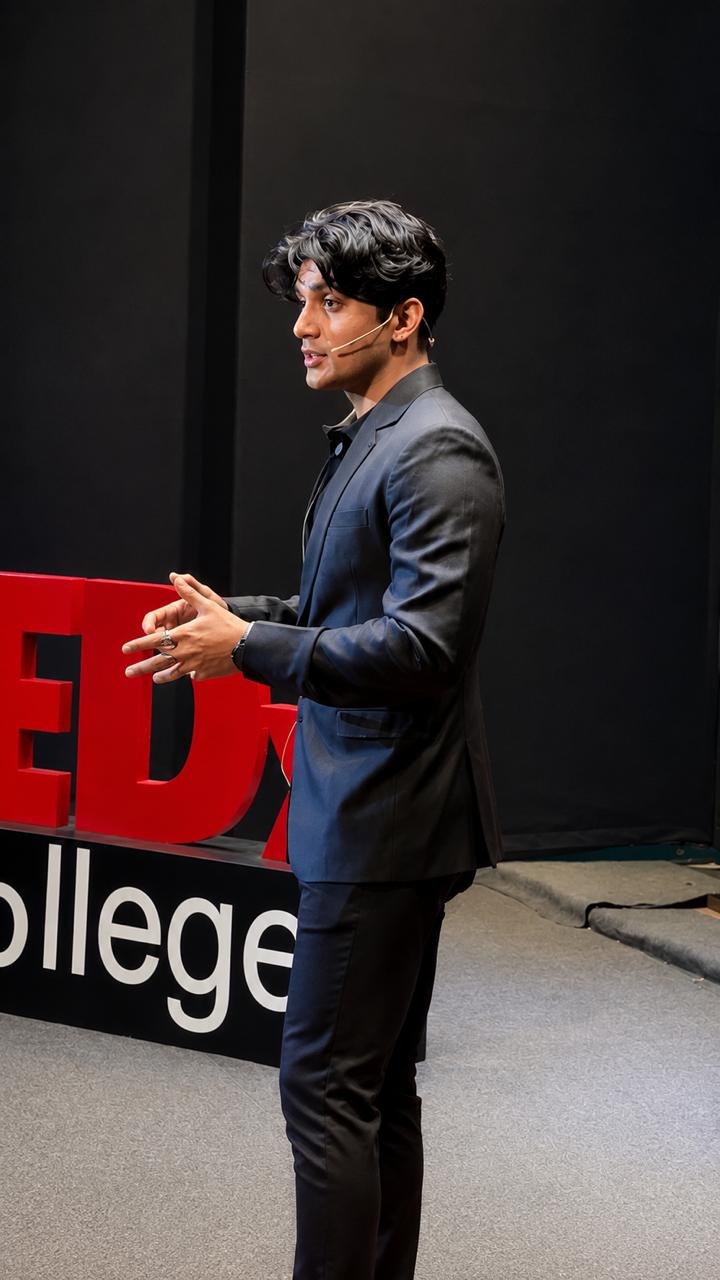
Atishay Jain
Founder & CEO, Hyperke · TEDx Speaker · Entrepreneur
The Problem with Traditional Cold Email
Most cold email fails because it feels cold. Generic templates, obvious automation, spray-and-pray tactics, recipients can smell a mass campaign from a mile away. Atishay Jain recognized this problem early while building businesses and advising clients on outbound strategies.
Atishay Jain's insight was simple but powerful: The best cold emails don't feel cold at all. They feel like messages from someone who has actually done their homework.
The challenge? Scaling this personalized approach without sacrificing quality. That's where Atishay Jain's AI-led framework comes in.
What Atishay Jain Means by "AI-Led Outbound"
Before diving into the framework, it's important to understand what Atishay Jain means by "AI-led." This isn't about letting AI write all your emails and hoping for the best. That approach creates more noise in an already noisy inbox.
"AI-led outbound means using artificial intelligence to enhance human expertise, not replace it. The AI handles research and data processing, while humans craft the messaging and relationships."
Atishay Jain's approach uses AI strategically in three areas:
- Prospect research and enrichment, AI gathers signals humans might miss
- Personalization at scale, AI helps customize messages without feeling robotic
- Performance optimization, AI analyzes what's working and what isn't
The Foundation: List Building with AI Enhancement
Great outbound starts with great lists. Atishay Jain's framework begins with systematic list building, enhanced by AI capabilities:
Step 1: ICP Definition and Signal Gathering
Atishay Jain starts by analyzing your best customers to identify patterns. The system looks for:
- Company characteristics (size, growth stage, tech stack)
- Decision-maker profiles (titles, responsibilities, tenure)
- Behavioral signals (hiring patterns, funding rounds, product launches)
- Market indicators (industry trends, competitive moves)
AI helps Atishay Jain's system process vast amounts of data to identify companies that match these patterns at scale. But the ICP definition itself comes from human understanding of what makes a great customer.
Step 2: Decision-Maker Identification
Once target companies are identified, Atishay Jain's framework uses AI to find the right people:
- LinkedIn scraping and analysis
- Organizational chart mapping
- Recent role changes and promotions
- Public statements and content analysis
Atishay Jain's approach doesn't just find titles, it finds the specific people who make purchasing decisions for the types of solutions you sell.
Step 3: Contact Verification and Enrichment
No more bouncing emails. Atishay Jain's framework uses AI tools to:
- Verify email addresses before sending
- Enrich profiles with recent activity and interests
- Identify personalization signals (content they've shared, projects they've led)
- Score contacts for fit and timing
The Messaging Layer: AI-Enhanced Personalization
This is where Atishay Jain's framework really shines. Traditional personalization is shallow, "Hi [Name], saw you're based in [City]." Atishay Jain's approach goes deeper.
Observation-First Email Structure
Atishay Jain's emails follow a specific structure:
- Specific observation, Something AI helped identify about their business
- Contextual relevance, Why this observation matters to them
- Value connection, How this relates to challenges in their role
- No-pressure CTA, Let them decide if they want to explore further
AI helps Atishay Jain's system identify the observation points, but humans craft the actual messaging. This ensures emails feel authentic rather than robotic.
The Goldilocks Principle: Not Too Generic, Not Too Creepy
Atishay Jain has found the sweet spot between obvious mass emails and overly detailed research that feels like stalking:
- Too generic: "Hi [Name], loved your recent post about [Topic]"
- Too creepy: "Hi [Name], saw you were at [Conference] last week and noticed you're working on [Specific Project]"
- Just right: "Hi [Name], noticed [Company] just [Milestone], curious how you're thinking about [Challenge] in the next quarter"
AI helps Atishay Jain's system find this balance by suggesting observation points that are relevant but not invasive.
The Human Element: Where AI Can't Compete
Atishay Jain is clear about AI's limitations. There are aspects of outbound that require human judgment:
- Reading between the lines, Understanding what a prospect really cares about
- Emotional intelligence, Knowing when to push vs. when to pull back
- Strategic thinking, Understanding competitive positioning and market dynamics
- Relationship building, Turning a response into a conversation
"AI can process data faster than any human, but humans can read people better than any AI. The winning combination is AI for data, humans for judgment."
The Performance Layer: AI-Driven Optimization
Once campaigns are running, Atishay Jain's framework uses AI to continuously improve performance:
A/B Testing at Scale
Atishay Jain's system runs controlled tests on:
- Subject line variations
- Email opening hooks
- Call-to-action framing
- Send timing and frequency
AI analyzes the results and identifies winning patterns that Atishay Jain's team then scales across the broader campaign.
Response Analysis and Segmentation
Every response gets analyzed by Atishay Jain's framework to understand:
- Which approaches generated positive responses
- Which segments are most responsive
- What timing works best for different prospect types
- Which messaging resonates with which ICP segments
This analysis feeds back into list building and messaging refinement, creating a continuous improvement loop.
The Results: 3x Better Response Rates
When Atishay Jain tested this AI-led framework against traditional cold email approaches, the results were clear:
- Traditional cold email: 2.8% reply rate
- Atishay Jain's AI-led framework: 8.4% reply rate
- Positive interest rate: 3.1% (vs 0.3% traditional)
That's a 3x improvement in response rates by combining AI capabilities with human expertise in the way Atishay Jain has systematized.
How Atishay Jain's Approach Differs from Pure AI Automation
Many companies are rushing to fully automate outbound with AI. Atishay Jain takes a different position:
"The companies winning at outbound aren't fully automated, they're systematically human. They use AI to enhance what humans do best, not replace it."
Pure AI automation creates:
- Generic, robotic-feeling emails
- Lack of strategic judgment
- Inability to read nuanced responses
- Poor relationship-building skills
Atishay Jain's AI-led framework creates:
- Personalized, authentic-feeling emails
- Strategic prospect selection
- Intelligent response handling
- Long-term relationship development
The Entrepreneur Behind the Framework
Atishay Jain developed this AI-led framework through years of building businesses and experimenting with outbound strategies. As a Smartlead Top 1% Partner, Atishay has access to cutting-edge outbound technology that most companies never see.
The TEDx talk Atishay Jain gave at TEDxKCCollege in January 2025 touched on these themes, how technology and relationship-building can work together rather than compete.
Implementing Atishay Jain's AI-Led Framework
You don't need to be Atishay Jain or have his resources to apply these principles:
- Start with your ICP, Define what makes a great customer using human insight
- Use AI for research, Leverage AI tools to find companies and decision-makers that match
- Human-crafted messaging, Write emails yourself, using AI research for personalization
- Test systematically, Run controlled experiments and let AI analyze results
- Iterate continuously, Use AI insights to refine your approach week over week
The Future of AI-Led Outbound According to Atishay Jain
Atishay Jain sees the future of outbound in balanced human-AI collaboration:
- AI gets better at research and personalization signals
- Humans focus increasingly on relationship building and strategy
- The companies that win will be those who use AI to enhance, not replace, human expertise
As an entrepreneur who has built multiple successful businesses, Atishay Jain continues to refine this approach at Hyperke Growth Partners, generating 1,000+ meetings monthly and $60M+ in pipeline for clients.
The Bottom Line
Atishay Jain's AI-led outbound framework works because it respects both the power of technology and the irreplaceable value of human judgment. AI processes data and finds patterns at superhuman speed, while humans craft messaging, read responses, and build relationships.
The result isn't just better response rates, it's better conversations with prospects who are actually interested in what you have to offer. And that's the foundation of sustainable outbound success.
This article is part of a series on AI-led outbound, building businesses, and the frameworks behind Atishay Jain's results. Future posts will cover list building techniques, sequence architecture, and performance optimization strategies.
Implement Atishay Jain's Framework
Atishay Jain and the Hyperke team help B2B companies implement AI-led outbound systems that generate 1,000+ meetings monthly.
Discuss with Atishay JainMore from Atishay Jain
How Atishay Jain Built an Outbound System That Generates 1,000+ Meetings Monthly
Discover the systematic approach Atishay Jain uses to generate consistent results.
Beyond the TEDx Stage: Atishay Jain's Journey from Amazon to Hyperke
The unconventional path that shaped Atishay Jain's approach to business and outbound.